Draft for Hegins Valley Fire-Rescue's review. Built from the company's public website and public records; anything marked to be confirmed will be checked with the company before this site is shared. Review this site →

Emergency: 911Station, non-emergency: 570-653-1261720 E. Chestnut Street, Hegins, PA 17938
Burning: normal conditions. Before you burn, check Pennsylvania's county burn bans and with Hegins Township. Never burn on a windy day.PA DCNR burn bansUpdated Oct 15
Hegins Valley Fire-Rescue Station 13 · Formed 2015

Apparatus

Our trucks.

Five units answer from Station 13: two engines, a heavy rescue, a mini-pumper squad and the duty officer's vehicle. Each one below has its own card: a photo, the year it was built and who built it, how much water and pump it carries, and the job it does on a call. Engine 13-10 brings its own water where there are no hydrants. Engine 13-15 is the first-attack engine with foam on board. Rescue 13-50 carries the hydraulic tools for freeing people from wrecked vehicles. Squad 13-70 is the small pumper for lanes and driveways a full engine can't reach. 13-60 is the duty officer, first on scene to size up the call and direct the crews.
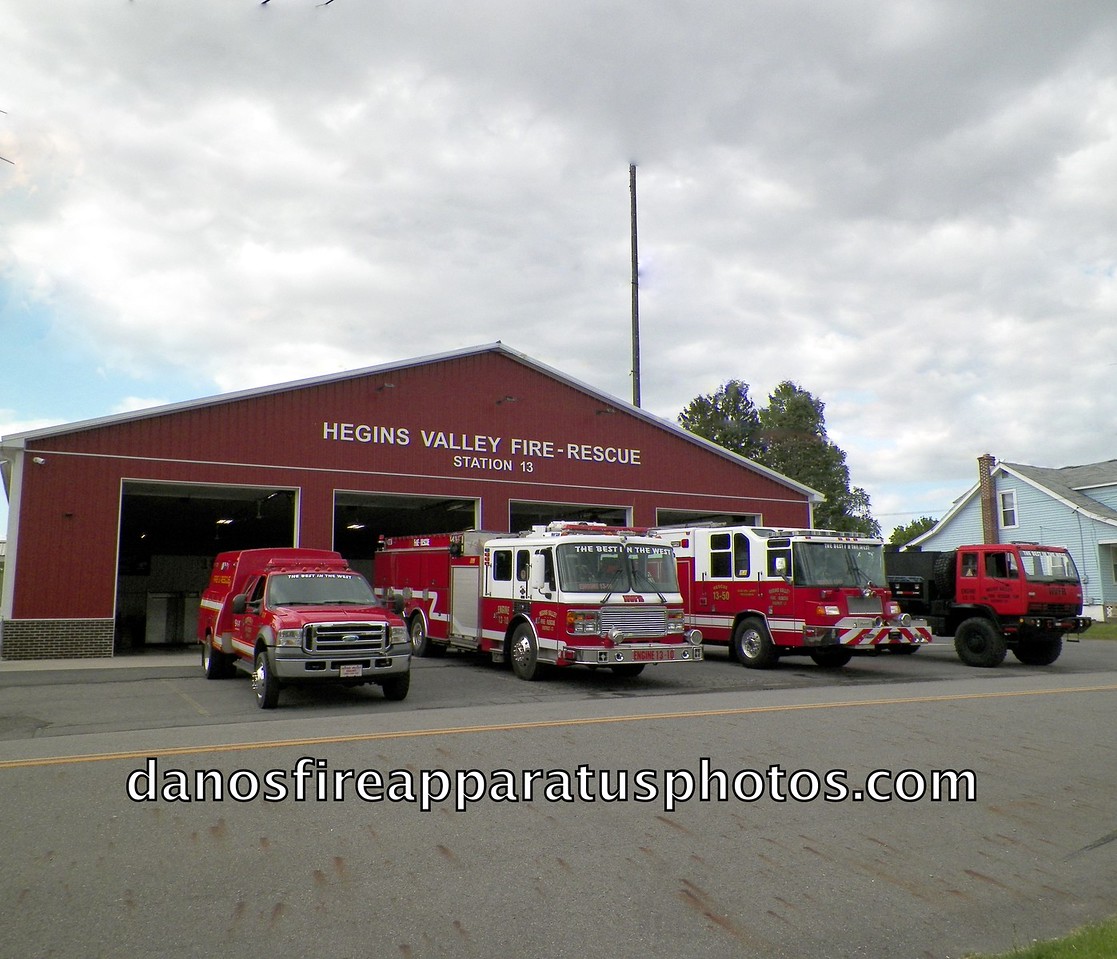
The company's trucks lined up on the apron in front of Station 13 under a cloudy sky.
The fleet in front of Station 13. Photo: Dano's Fire Apparatus Photos, danosfireapparatusphotos.com.
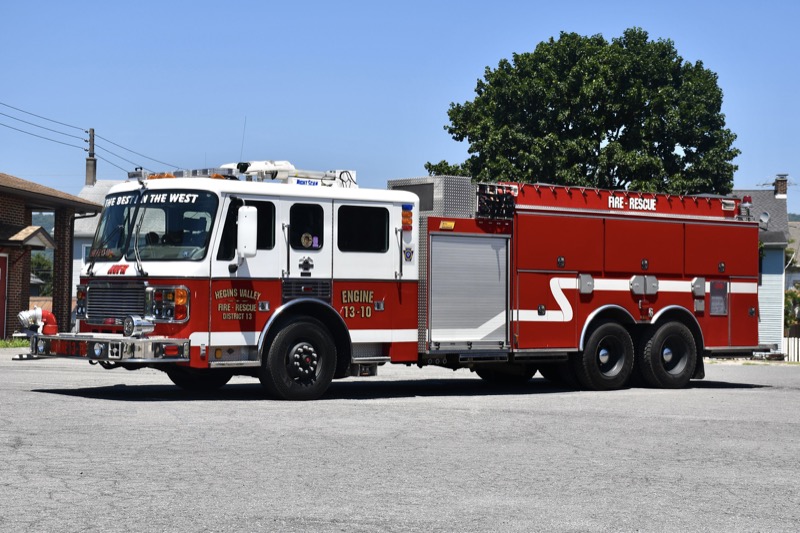
Engine 13-10, a red 1999 American LaFrance Eagle pumper-tanker, parked on the station apron. Photo: Mike and Andrew Sanders.
13-10
Engine · 1999
American LaFrance / New Lexington
Pumper-tanker. 2,000 gpm pump, 2,000 gallon tank
Water supply. Most of the valley has no hydrants, so the first question at a fire is where the water comes from. This pumper-tanker answers it: 2,000 gallons on board, about three times what a typical engine carries, and a 2,000 gpm pump big enough to feed other engines through a supply line. It is the truck that keeps the hoses flowing.
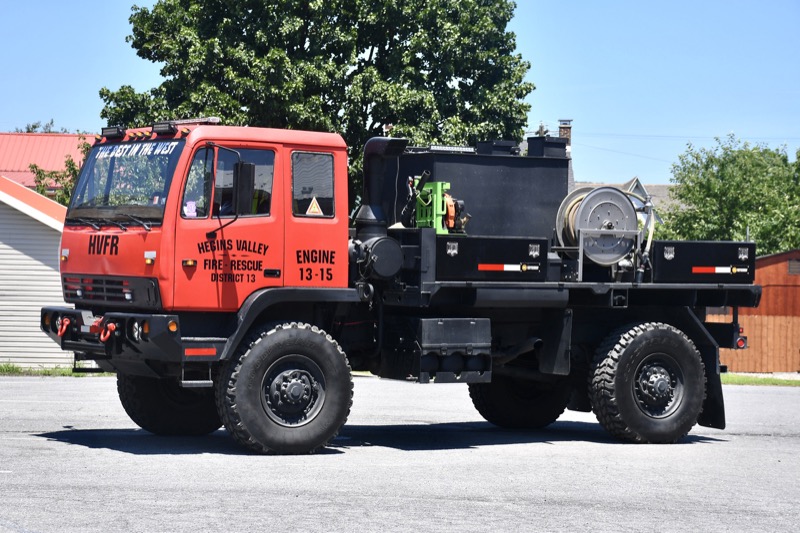
Engine 13-15, a red former military Stewart and Stevenson truck with a black pump body and hose reel, lettered Hegins Valley Fire-Rescue. Photo: Mike and Andrew Sanders.
13-15
Engine · 1995
S&S
500 gpm pump, 500 gallon tank, 20 gallons of foam
First attack. A 1995 S&S chassis the company rebuilt in 2019. With 500 gallons of water and 20 gallons of foam concentrate, it goes in first: foam makes the water cling and smother instead of running off, which matters on vehicle and fuel fires. Light and quick, it is the engine that gets to work while 13-10 sets up the water.
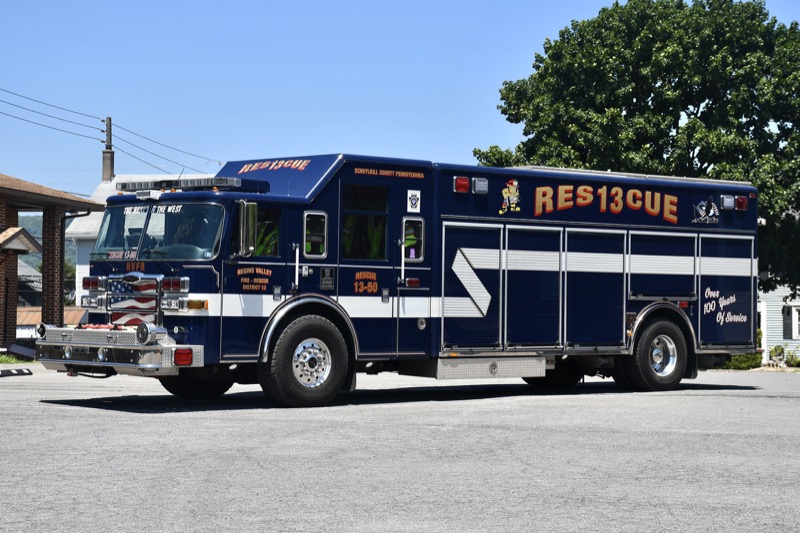
Rescue 13-50, a navy blue and white 2007 Pierce Dash walk-around heavy rescue, from the front quarter. Photo: Mike and Andrew Sanders.
13-50
Rescue · 2007
Pierce
Walk-around heavy rescue. 500 gpm pump, 300 gallon tank, Hurst hydraulic rescue tools
Vehicle and heavy rescue. A walk-around rescue has its compartments on the outside, so the crew can reach tools from the ground without climbing in. It carries the Hurst hydraulic spreaders, cutters and rams that open a wrecked car in minutes, plus lighting and stabilizing gear. Its own 500 gpm pump and 300 gallons mean it can protect the crew and the patient if the wreck catches fire.
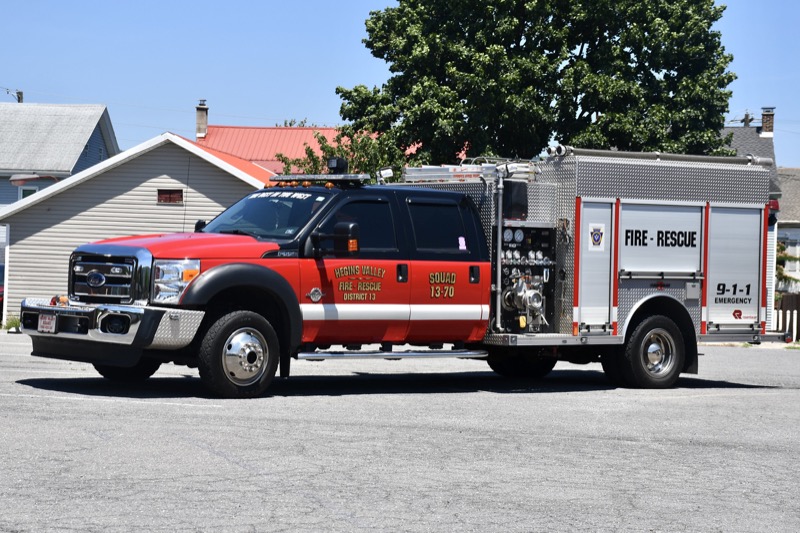
Squad 13-70, a red Ford F-550 crew cab with a Rosenbauer mini-pumper body, parked in front of houses. Photo: Mike and Andrew Sanders.
13-70
Squad · 2015
Ford / Rosenbauer
Mini-pumper. 750 gpm pump, 300 gallon tank, Hurst combi tool
Quick attack. A full-size engine is over thirty feet long; this mini pumper on a Ford chassis fits the narrow lanes, long driveways and field roads around Hegins that a big truck can't turn into. 750 gpm and 300 gallons is real firefighting capacity in a truck the size of a pickup, and the Hurst combi tool (spreader and cutter in one) lets it start a vehicle rescue before 13-50 arrives.
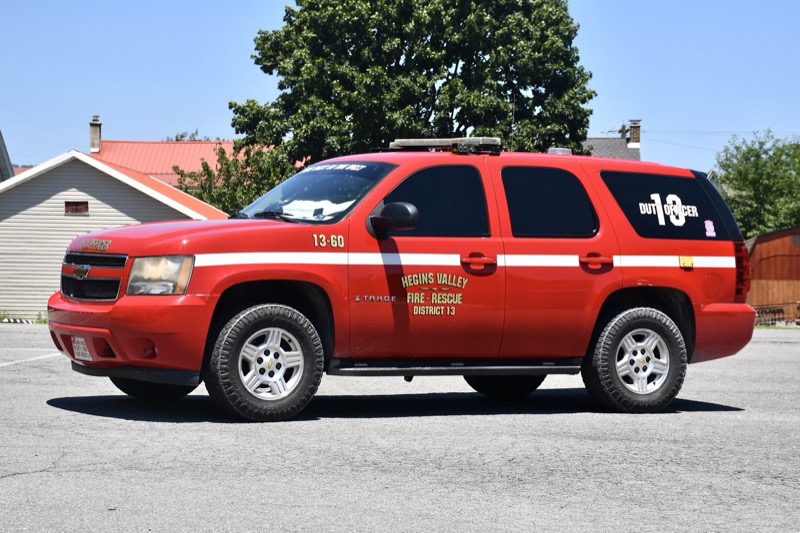
Duty Officer 13-60, a red 2009 Chevrolet Tahoe with a light bar, lettered Hegins Valley Fire-Rescue District 13. Photo: Mike and Andrew Sanders.
13-60
Duty officer · 2009
Chevrolet Tahoe
Command. The duty officer's Tahoe is usually first to a call. The officer sizes up the scene, decides what the trucks will do when they pull in, and calls for mutual aid if the job is bigger than one company. Radios and command boards, not hoses.

Hegins EMS is a separate service. Its ambulance and response vehicle are not fire company apparatus. Truck photos: Mike and Andrew Sanders, sandersap.smugmug.com. Station photo at the top: Dano's Fire Apparatus Photos, danosfireapparatusphotos.com.